
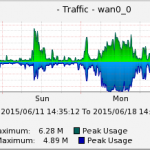
Gradient support for Cacti Graphs
Today we’re going to add a new functionality to Cacti to support gradients within the Cacti graphs supporting AREA graph items.
This involves editing the lib/rrd.php file so the changes will be gone after an update of Cacti. Nevertheless it’s easy to re-add as the file doesn’t change much between version upgrades.
Read More

Upcoming nmidSmokeping updates
nmidSmokeping is going to receive a major update to support monitoring if specific interfaces and adding smokeping slave support. Read More

Price reduction on CereusAgent
In order to provide you with the best supported product at an affordable price, we decided to reduce the price of our CereusAgent addon significantly. The new pricing is effective now and can be revied by using the purchasing link to the Standard and Enterprise editon.

CereusMonitoring – Trial Accounts available !
Trial Accounts are now available for CereusMonitoring. Please head over to Cereus-Monitoring.com for more information.

CereusAgent has been released
CereusAgent v1.03 has been released. This new exciting addon for Cacti allows you to create as many stand-alone pollers as you require while being able to centrally manage these. No permanent connection is required after the initial configuration/setup so you can place a poller on a customer site ( e.g. SOHO, remote offices ) and collect the data once a week.
CereusAgent about to be released
CereusAgent is reaching it’s completion. There will be two different editions available targeting SMB market as well as service providers. The Standard Edition contains 4 licences which allows 1 master and 3 remote polling agents. The Enterprise Edition does not contain any restrictions. Both editions share the same feature set.
The product webpage is online and orders can be placed. Visit the product page !
nmidAgent becomes CereusAgent
The new nmidAgent remote poller plugin for Cacti has been renamed to CereusAgent to fit into the corporate naming of new commercial plugins.
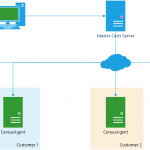
nmidAgent – Alpha tests started
The new nmidAgent remote poller plugin for Cacti has moved into Alpha phase. Testing has started at a customer site with good results being reported so far.
Current functionality includes:
– Syncing master server with remote pollers
– Assign devices to remote pollers
– Retrieve data from remote pollers (Pull mode)
– Transfer data from remote pollers to master server (Push mode)
Future updates will include:
– SSH based syncing (currently only direct SQL connection supported)
– RSYNC based sync with remote pollers ( scripts/plugins/templates …)
– Though data consistency checks
– Enhanced configuration for remote poller ( e.g. how long to keep data )
– Alerting in case of failures
– Failover capabilities
Head over to the contact form if you have any inquiries or want to be part of the alpha/beta testing phase.

nmidAgent – Remote poller for Cacti
We are excited to announce our upcoming Cacti® plugin is coming along nicely!
This new plugin will allow you to setup distributed Cacti pollers or “agents” with a central data aggregation and presentation server.
Remote pollers are using an on-demand mechanism to transfer polled data without the need to create NSF shares or permanent SQL connections to the Master system.
Features of this plugin:
- No polling required from the master server ( though possible )
- Distributed/Decentralized polling
- Re-use of cacti internal functions
- Remote poller still collects data even if no connection to Master servers exists. Data will be transferred at a later time.
- All plugins work as designed on the master AND slave systems (thold, Reportit, CereusReporting …. )
- Different polling times possible ( Master: 5 minutes, Slave 1: 1 minute, Slave 2: 5 minute, RRD file update on master: Every 30 minutes )
- Data consistency/safety done using SQL methods/functions
Stay tuned and register for the newletter !
nmidDataExport plugin released
A new plugin for exporting in/outbound interface data to CSV or JSON format has been released.
It regularly exports the last 1 hour of data to a CSV or JSON compatible file which can be processed by other applications for further analysis ( on-demand, financial calculations … )
Look here for more details: nmidDataExport